
I missed perimenopause — while living through it.
A letter to the women coming after me
When I graduated from university, some of my friends went backpacking in Europe. Unfortunately, I couldn't afford it, so I went straight to work. They sent postcards and I saw the pictures, but I always wondered what it would have felt like to be with them. Discovering new places, figuring out how to get out of the trouble I no doubt would have gotten into, meeting other like-minded young women having similar experiences.
For years, those photos lived in my head. The candlelit dinners in Florence. Getting gloriously lost in Prague. The friendships forged over cheap wine and missed trains. I didn't resent my friends for going — life had simply handed us different itineraries. But I always felt like I'd missed something that couldn't quite be replicated.
It's how I often feel about perimenopause.
I journeyed through it before it was talked about, struggled with symptoms I didn't identify as hormone-related, and felt quite alone and frustrated throughout the experience. I say 5-ish years, because while I know it ended on May 7th, 2022 — I truly have no idea when my perimenopause ride started. That's the thing about a trip you didn't know you were on. You can't quite pinpoint the departure.
And without knowing you've departed, you can't plan the journey. No map. No itinerary. No sense of how long the trip will last or what's coming around the next bend. Not knowing when you left also means not knowing what you might have done differently — earlier conversations with your doctor, earlier adjustments to sleep, nutrition, exercise, or treatment options that could have meaningfully changed the experience. Getting lost in Prague at 22 is a story you dine out on for decades. Getting lost in perimenopause in your 40s, without a guide or a plan, has real consequences for your long-term health and longevity.
Brain fog I blamed on a busy life. Sleep disruptions filed under stress. A general sense of not quite being myself that I couldn't explain to my doctor, my partner, or frankly myself. No one sent me a postcard. No one said — hey, this is what's happening, here's what helped, you're not alone.
That's what breaks my heart a little, looking back. Not the symptoms themselves — but the isolation of not having a name for them. Of not knowing that millions of other women were on the exact same ride, at the exact same time, feeling the exact same way.
Here's what's different for you.
A simple word I didn’t know - perimenopause - which Canadian women have been searching for online at an all-time high since 2022. As this Google Trends chart shows, searches have surged dramatically since 2022 and have never been higher. Another trend? The content about menopause on social media keeps multiplying, so much so that it’s hard to believe what’s real anymore.
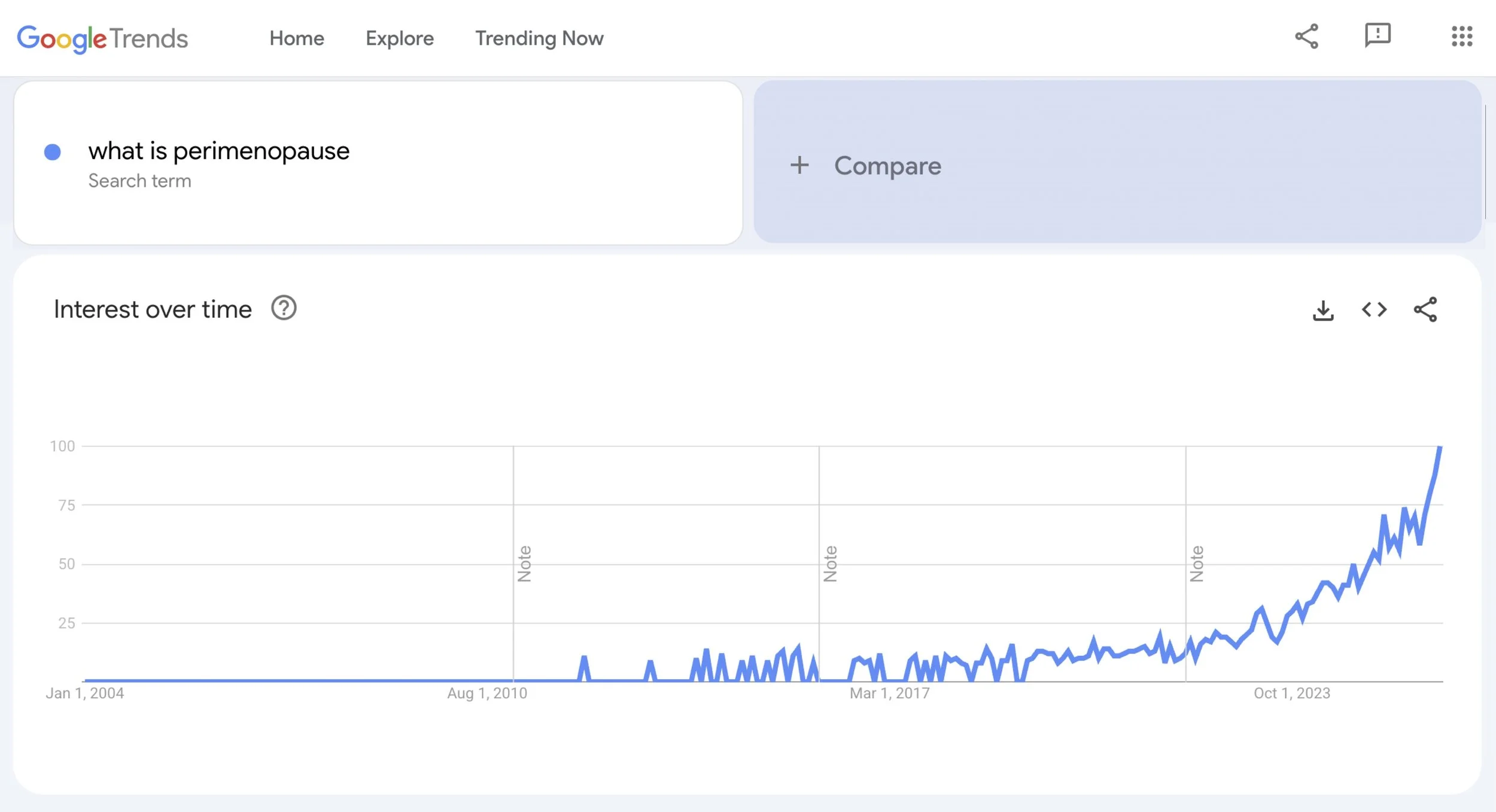
Google Trends Searches for What is Perimenopause since 2004, showing a marked increase since 2022.
The conversation has finally cracked open — in workplaces, in doctors' offices, in group chats, on podcasts, in the media. The language exists now. The community exists. The support exists. You have something I didn't: a map, and people who've already been there waiting to help you read it.
So if something feels off — your sleep, your mood, your memory, your cycle — please don't do what I did. Don't file it under stress and move on. Don't spend years wondering why you don't feel like yourself. And don't leave something this important to chance.
Ask the question. Say the word. Make a plan.
Don't be the one who missed the trip. The girls are already there. Come join us on the Ask Elina app.
Download it here for Apple or Android.
Or share this article with someone who needs to read it.
Nathalie Bélanger is co-founder of Ask Elina, an AI-powered menopause mentor helping women navigate perimenopause and menopause with evidence-based support.